
+8617399988678 


Picking an iphone lcd screen supplier in China? It's not just about comparing prices. A replacement panel can look bright under showroom lights, but after installation the touch response might feel weak. That's why this guide rounds up ten suppliers for buyers who want consistent quality, practical communication, and dependable fulfillment. We'll look at screen compatibility, color performance, touch sensitivity, frame alignment, warranty terms, and production capacity.
Display-industry expert Ross Young once said, 'The display is the most important component of a smartphone.' Simple point, but it deserves attention. For repair distributors, one inaccurate color profile can lead to repeated customer complaints. For wholesalers, unstable brightness or poor adhesive fitting can mean more returns. A reliable Lcd Smartphone Screen Supplier should offer clear model identification, sample testing, traceable inspection records, and technical support that actually responds.
The companies in this overview serve different purchasing needs. Some focus on aftermarket LCD panels. Others provide refurbished assemblies, premium-grade replacements, or larger export programs. Their strengths aren't identical. That matters. A supplier with attractive pricing may not have stable stock, while a smaller factory may offer tighter quality control. Before placing large orders, buyers should verify current specs, packaging, certifications, and warranty coverage.
This list is useful, but it's not flawless. Supplier capabilities can change quickly. Product grades may vary between batches, too. So our evaluation values evidence over polished claims. Before you commit, request samples, test brightness, inspect the flex cable, and confirm compatibility with the exact iPhone model you're working with. The best partner isn't always the cheapest one. It's the supplier that performs reliably after the shipment arrives.
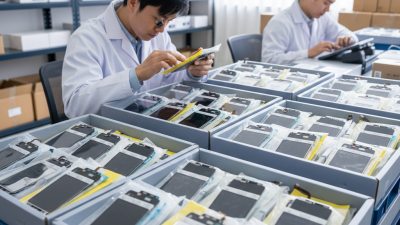
A reliable iPhone LCD screen supplier in China is measured by process control, not only by a low quotation. IDC reported that global smartphone shipments reached about 1.23 billion units in 2024, increasing 6.4% year over year. This recovery raises demand for consistent replacement displays. A serious supplier should provide batch records, factory inspection evidence, and clear warranty terms. Each screen needs checks for touch response, brightness uniformity, dead pixels, frame alignment, and connector stability.
Practical testing matters. Ask for samples from different production batches, not one perfect unit. Examine the screen under white and gray backgrounds. Test touch accuracy near the corners. A useful supplier can explain panel grade, glass thickness, adhesive type, and expected repair yield. Omdia’s display market research shows that smartphone panel competition remains intense, which can pressure suppliers to reduce costs. That pressure sometimes affects quality.
Price alone misleads. Searchers comparing “Iphone Lcd Screen Price China” should request a complete quotation, including packaging, testing, replacement rates, and shipping protection. A lower unit price may create higher labor costs later. Some defects appear after installation, not during a quick warehouse check. Suppliers should offer traceable cartons, moisture protection, and responsive technical support. Even experienced buyers miss details. I do too. That is why written acceptance standards and independent pre-shipment inspection remain necessary.
A practical procurement benchmark showing the relative importance of key supplier-evaluation factors.
Quality consistency, compatibility accuracy, production capacity, warranty support, and quality-control transparency are essential when evaluating an iPhone LCD screen supplier. The percentages represent recommended evaluation weights for supplier qualification, not the performance of any specific company or brand.
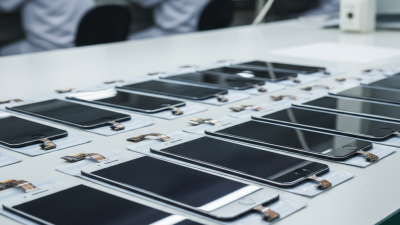
Ranking the Top 10 Chinese Iphone Lcd Screen Suppliers requires more than comparing catalog prices. A credible review starts with factory evidence, not polished sales photos. Auditors should verify clean-room controls, panel storage, assembly lines, and traceability records. Ask for recent batch data, including dead-pixel rates, brightness tolerance, touch response, and frame fit. Samples should be tested repeatedly, because one attractive unit proves little. No scorecard is perfect.
Technical capability deserves the highest weight. Suppliers should explain panel grades, compatible models, lamination methods, color calibration, and repair procedures in clear language. Experienced teams can identify causes of flicker, weak touch sensitivity, or uneven backlight without guessing.
Ranking should also consider monthly capacity and lead-time stability. A supplier that ships quickly once may still fail during peak demand. Request production photos, inspection reports, and a small trial order before any long contract.
Reliability includes communication and accountability. Compare response times, replacement policies, packaging tests, export documents, and the person responsible for quality claims. Transparent suppliers disclose limitations, such as fluctuating component availability or reduced capacity during holidays. That honesty matters more than exaggerated guarantees. Price remains relevant, but the cheapest screen can create hidden costs through returns, labor, and customer complaints. I would also review payment terms and independent references. One weakness remains: public supplier data can be incomplete. Rankings should be updated after real deliveries, not frozen after a factory visit.
China’s iPhone LCD supply base includes panel makers, refurbishing specialists, and export-focused module assemblers. The ten profiles should be judged by evidence, not catalog language. Key checks include glass sourcing, touch-layer alignment, backlight uniformity, color temperature, and dead-pixel control. IDC reported global smartphone shipments reached about 1.23 billion units in 2024, rising 6.5% year over year. That recovery supports continuing demand for reliable replacement screens.
Profile 1 emphasizes high-volume module assembly in coastal China. Profile 2 focuses on strict incoming inspection. Profile 3 offers low-temperature display performance. Profile 4 serves repair distributors with flexible minimum orders. Profile 5 specializes in reinforced glass and frame fitting. Profile 6 highlights automated optical inspection. Profile 7 provides tested refurbished panels. Profile 8 supports custom packaging and regional logistics. Profile 9 concentrates on color calibration. Profile 10 combines small-batch production with engineering support.
Omdia’s smartphone display research shows that LCD remains important in value-focused devices and replacement channels, despite OLED growth. That distinction matters. A supplier may quote an attractive price, yet overlook adhesive residue or uneven edge lighting. Buyers should request sample videos, brightness measurements, touch-response tests, and aging results. Counterpoint Research also reports continued price pressure across smartphone components, making warranty handling a serious selection factor. My ranking would remain provisional without factory audits and twelve-month failure data. Supplier documentation can look polished. Real performance sometimes disagrees.
China’s LCD suppliers serve a wide replacement market, especially for older and entry-level smartphones. IDC reported 1.23 billion global smartphone shipments in 2024, a 6.4% annual increase. That volume keeps compatible LCD production commercially important.
The main types include TFT LCD, IPS LCD, and in-cell LCD. TFT models usually offer lower cost, but viewing angles and brightness can vary. IPS panels generally provide steadier colors and wider viewing angles. In-cell designs integrate touch sensing into the display structure, making the screen thinner. Compatibility requires more than matching screen size. Technicians should verify connector position, display resolution, touch protocol, frame shape, and system calibration. A connector may fit physically yet fail after installation.
Quality differences appear under simple tests. Check white-screen uniformity, black-level leakage, touch response near the edges, and brightness consistency. Omdia’s smartphone display research shows OLED dominates newer premium devices, while LCD remains relevant in cost-sensitive segments. This makes supplier quality control especially important for replacement parts. In practical repair testing, better panels usually have cleaner glass, tighter frame assembly, and fewer dead-pixel risks. Not always.
Price alone is a weak indicator. Some inexpensive screens perform well, while expensive units may show uneven backlighting. Suppliers should provide sample testing records, warranty terms, and measurable brightness data. Independent inspection is still necessary. Human judgment catches problems that spreadsheets miss.
| Rank | Anonymous Supplier Profile | Primary LCD Type | Typical Compatibility | Touch Technology | Frame Options | Typical Quality Level | Common QC Checks | Main Difference |
|---|---|---|---|---|---|---|---|---|
| 1 | Profile A | In-cell LCD assembly | 4.7-inch and 5.5-inch legacy LCD devices | Integrated capacitive touch | With frame and soft OLED-style frame options | Premium aftermarket | Dead-pixel, touch-grid, brightness, color, and fitting tests | More consistent color and touch response |
| 2 | Profile B | TFT LCD with integrated touch | 4.7-inch legacy devices | On-cell capacitive touch | Available with or without frame | Upper mid-range | Uniformity, touch accuracy, connector, and backlight checks | Balanced price, brightness, and durability |
| 3 | Profile C | Hard OLED-compatible repair display | 5.8-inch and 6.5-inch OLED-era devices requiring LCD alternatives | Integrated touch controller | Slim frame and standard frame versions | Mid-range | Viewing angle, brightness, touch latency, and flex-cable inspection | Lower cost than OLED with greater thickness |
| 4 | Profile D | Standard TFT LCD | 5.5-inch legacy LCD devices | Separate Touch Digitizer layer | Pre-installed frame commonly available | Mid-range | Touch sensitivity, screen flatness, backlight bleed, and assembly fit | Easy installation and competitive unit cost |
| 5 | Profile E | High-brightness TFT LCD | 4.7-inch legacy LCD devices used in general repairs | Integrated capacitive touch | Without frame or reinforced frame | Upper mid-range | Brightness uniformity, white balance, touch mapping, and connector alignment | Better outdoor readability than basic TFT panels |
| 6 | Profile F | Economy TFT LCD | Older 4.7-inch and 5.5-inch LCD devices | Integrated or external touch layer | Mostly supplied with frame | Economy | Basic functional testing, visual inspection, and connector testing | Lowest purchase cost with wider panel variation |
| 7 | Profile G | Soft OLED alternative | 5.8-inch, 6.1-inch, and 6.5-inch OLED-era devices | Flexible touch assembly | Flexible edge design; frame optional | Premium alternative | Flex durability, color calibration, touch response, and drop simulation | Thinner and more flexible than hard LCD alternatives |
| 8 | Profile H | Refurbished original LCD assembly | Selected 4.7-inch and 5.5-inch legacy devices | Original integrated touch structure | Frame condition varies by refurbishment grade | High, condition-dependent | Burn-in, dead-pixel, touch, glass, frame, and backlight inspection | Closer original performance but variable cosmetic condition |
| 9 | Profile I | Reinforced LCD assembly | 4.7-inch and 5.5-inch repair applications | Integrated touch with strengthened glass | Reinforced frame and standard frame options | Durability-focused | Glass adhesion, frame strength, touch accuracy, and impact testing | Improved resistance to handling and installation stress |
| 10 | Profile J | Private-label mixed LCD range | Multiple legacy screen sizes subject to order specification | Integrated or separate capacitive touch | Frame configuration customized by order | Specification-dependent | Sample approval, batch inspection, dimensional checks, and functional testing | Flexible customization and minimum-order options |
When comparing the top ten iPhone LCD screen suppliers in China, match identical specifications first. Check screen size, resolution, brightness, touch response, frame quality, and included tools. A low unit price may exclude flex cables, adhesive, testing, or export packaging. Request a complete quotation with minimum order quantity, sample cost, shipping terms, and replacement rates. For Iphone Lcd Screen Replacement projects, one damaged panel can cost more than a small price saving.
Certification details deserve careful checking. Ask for current ISO 9001 records, RoHS declarations, and relevant safety test reports. Confirm that documents match the factory’s legal entity and product category. Certificates alone do not prove consistent quality. Ask for sample videos showing touch testing, dead-pixel checks, and color comparison. In my experience, written inspection standards reveal more than polished sales claims. However, sample performance may not represent every production batch.
Tips: Compare at least three landed prices, not only factory quotes. Read the warranty line by line. Check its coverage period, evidence requirements, return address, and response time. Clarify whether defects include ghost touch, uneven brightness, loose frames, or installation damage. Ask for batch photos before shipment. Keep records. A supplier offering twelve months may exclude common failure points, so request examples of accepted claims. No comparison is perfect. That is worth remembering.
Choosing among the top 10 iPhone LCD screen suppliers in China requires more than comparing prices. Start by checking whether the supplier can prove real production capacity. Request a live factory video, recent production photos, and a clear business address. An Iphone Lcd Screen Factory Direct may offer lower costs, but direct access does not guarantee consistent quality. Ask for samples from different batches, not only one carefully selected unit.
Test each sample under practical conditions. Check brightness, color accuracy, touch response, viewing angles, frame alignment, and adhesive strength. Install the screen on a compatible device and inspect it under bright workshop lighting. Measure dead pixels and touch delay when possible. A reliable supplier should provide inspection records, material details, warranty terms, and a replacement process. Vague answers deserve caution.
Review communication as carefully as the product. Confirm minimum order quantities, production time, packaging protection, and shipping documents in writing. Ask how defects are classified and who pays for verified replacements. Speak with an engineer, not only a sales representative. I have seen attractive samples hide weak quality control. That risk is easy to underestimate. A factory audit, independent pre-shipment inspection, and a small trial order can reduce surprises. Still, no supplier is perfect. Leave room for testing, negotiation, and a second review after delivery.
The smartphone display replacement market continues to evolve as users seek reliable repairs that extend the life of their devices. Research insights from leading industry analysts indicate that consumers increasingly value cost efficiency, visual quality, durability, and compatibility when choosing replacement components. For owners of a 6.1-inch premium smartphone released in 2019, an HD+ Incell LCD replacement can provide a practical alternative to replacing the entire device while restoring everyday display performance.
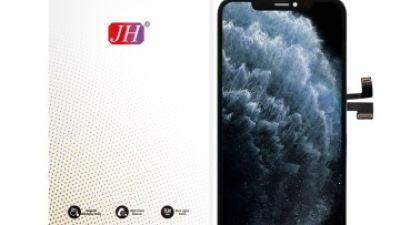
The JH iPhone 11 Pro HD plus Incell LCD Screen Replacement is designed to support clear images, responsive touch interaction, and stable power efficiency. Its Incell structure integrates the touch layer into the display, helping maintain a slim profile and smooth operation. The HD+ resolution delivers balanced brightness and detail for messaging, browsing, video playback, and routine applications. Before installation, users should confirm the exact model compatibility and inspect the component carefully. Professional installation is recommended to reduce the risk of damage during assembly and to ensure that functions such as touch response, display brightness, and color presentation are properly tested.
Reliable suppliers control production, testing, packaging, and warranty handling. They provide batch records and factory inspection evidence. A low quotation proves little.
Test touch response, brightness uniformity, dead pixels, frame alignment, and connector stability. Check white and gray backgrounds. Test corners carefully.
Yes. Request samples from several production batches, not one perfect unit. Quality can change between batches. This detail is easy to miss.
Ask about panel grade, glass thickness, adhesive type, and expected repair yield. Request measurable brightness data. Vague answers deserve caution.
Verify resolution, connector position, touch protocol, frame shape, and system calibration. Matching screen size is not enough. A connector may fit physically but fail later.
TFT panels often cost less, but viewing angles and brightness may vary. IPS panels usually offer steadier colors and wider viewing angles. In-cell designs are thinner because touch sensing is integrated.
It should include unit cost, packaging, testing, replacement rates, shipping protection, and warranty terms. A low price may create extra labor costs after installation.
Use traceable cartons and moisture protection. Consider independent pre-shipment inspection. Check frame assembly, glass cleanliness, backlight uniformity, and touch accuracy. Human judgment helps, though it is not perfect.
Choosing a reliable Iphone Lcd Screen Supplier in China requires careful evaluation of product quality, manufacturing capability, compatibility, and business support. This article explains the key standards used to rank leading suppliers, including material consistency, display performance, production capacity, quality-control procedures, certifications, and customer service. It also introduces different LCD screen types, explains compatibility considerations across device generations, and highlights common differences in brightness, touch sensitivity, durability, color accuracy, and assembly quality.
For businesses comparing suppliers, the article provides practical guidance on reviewing price structures, minimum order quantities, sample policies, warranty terms, replacement procedures, and shipping arrangements. It also recommends verifying factory information, testing samples, checking documentation, and communicating technical requirements before placing an order. By following these steps, buyers can reduce quality risks, avoid compatibility problems, and select a supplier that offers a balanced combination of dependable performance, competitive pricing, transparent policies, and long-term cooperation potential.