
+8617399988678 


Picking trustworthy suppliers based in China is a pretty important step for anyone sourcing Phone Repair Parts worldwide. Ideally, a good supplier should provide consistent quality, clear specs, and have solid experience with exports. Sure, they might offer a wide product range, but don’t let that be the main factor—always verify first.
Most seasoned buyers will check out samples before going for larger orders. They’ll look at things like screen brightness, touch response, connector alignment, battery labels, and how well the camera works. Fitment is key, after all. Tiny details really matter; a part might look exactly the same online, but then fail during installation. That’s why having good technical communication with your supplier is so crucial.
In this guide, we’ll look at some of the top supplier types in China’s repair parts market—covering display assemblies, batteries, charging ports, cameras, housing parts, tools, and repair accessories. When you’re evaluating them, consider their manufacturing capabilities, quality control measures, documentation, packaging, delivery times, and after-sales support. Reliable suppliers will usually provide test reports, product codes, compatibility info, and traceability details like batch numbers. They should also clarify whether parts are original, refurbished, compatible, or aftermarket—being clear about this helps you make smarter buying choices.
Experience has shown us that the cheapest quote isn’t always the real total cost. Poor packaging, inconsistent adhesives, or wrong flex cables can lead to returns and delays—so don’t just judge a supplier by their catalog. A shiny brochure can hide weak inspection processes, after all. No supplier is perfect— even reputable factories might get a model mix-up or face seasonal delays. It’s smart to request current samples, double-check warranty details, and test key parts with qualified technicians. And don’t forget about protecting yourself during payment and making sure shipping documents are legit.
The suppliers we’re talking about here are chosen based on transparent criteria, not just hype or promotional promises. Their true value lies in consistency, good communication, and solid proof. Using this framework, international buyers can build safer, more trustworthy relationships when sourcing parts online.
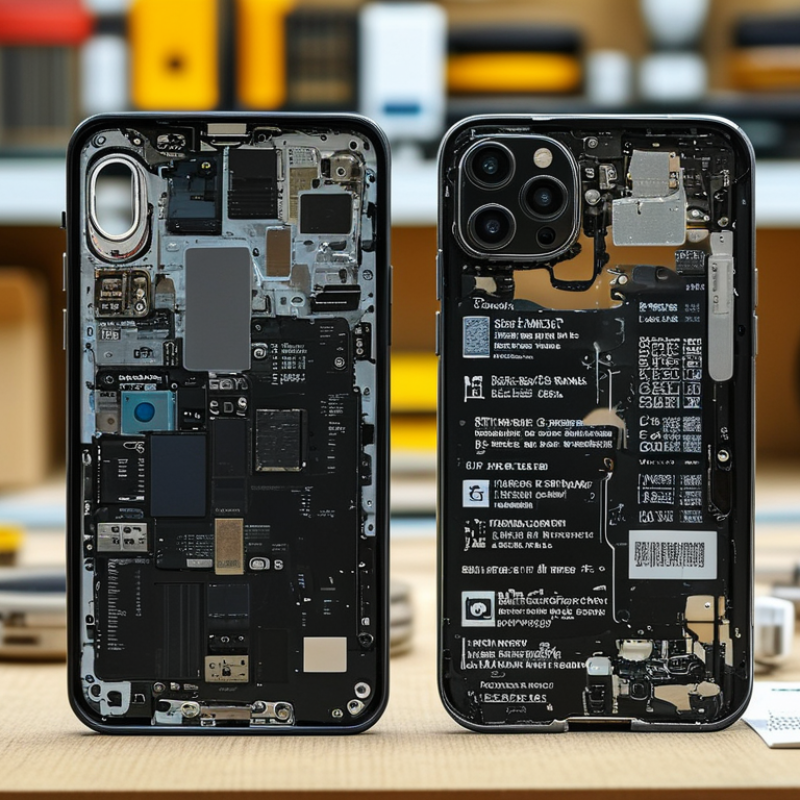
China’s role in the global phone repair parts market extends beyond low-cost manufacturing. Global demand follows a vast installed device base, not only new sales. IDC recorded 1.17 billion smartphone shipments in 2023, followed by 1.23 billion in 2024. That rebound supports continued demand for screens, batteries, charging ports, cameras, and connectors. China remains central because its industrial clusters combine tooling, circuit assembly, testing, packaging, and freight services. This proximity can shorten replenishment times for overseas repair distributors.
Environmental pressure is also changing purchasing decisions. The United Nations Global E-waste Monitor 2024 reported 62 million tonnes of electronic waste in 2022. Only 22.3% was formally collected and recycled. Longer device use can reduce replacement waste, but repair parts must still meet safety and performance expectations. Recycled materials and new aftermarket components are not interchangeable. The distinction matters.
In supplier evaluations, buyers should request test reports, batch traceability, warranty terms, and clear compatibility records. Sample checks should include display brightness, battery capacity, connector fit, and charging stability. Paperwork matters. Price alone is not proof of value. Some low-cost parts look excellent during installation but fail after repeated use. This is where supplier experience and independent inspection become important. China’s scale is real, but quality can vary between factories and batches. Professional buyers should verify more than one shipment before expanding orders.
Reliable Chinese phone repair parts suppliers are identified through evidence, not attractive catalogs. A polished website proves little. Request the company’s registration details, production address, export history, and quality-control process. The legal company name should match invoices, bank information, and shipping documents. Discrepancies deserve attention.
Ask for samples before placing a large order. Test screen brightness, touch accuracy, frame alignment, camera focus, charging speed, and battery performance. Record results with photographs and simple test sheets. Professional suppliers explain tolerances instead of promising perfection. They should also provide part specifications, inspection reports, packaging details, and a clear replacement policy. A short warranty is not enough if its conditions remain vague.
Communication reveals practical reliability. Does the supplier answer technical questions directly? Can they identify a production batch months later? Traceable labels, sealed packaging, and consistent serial records reduce mistakes during installation. Independent factory inspections can verify equipment, worker processes, and storage conditions. Still, inspections have limits. A clean visit may not reflect every shipment. I have seen small sample differences become costly returns. That is why repeat testing matters. Compare samples from separate batches, negotiate written quality standards, and keep payment steps connected to inspection results. Suppliers willing to discuss defects openly are often more dependable than those offering only the lowest price.
| Evaluation Dimension | What Reliable Suppliers Commonly Provide | Practical Buyer Benchmark | Documents or Evidence to Request | Warning Signs |
|---|---|---|---|---|
| Business Verification | A legally registered business with a consistent company profile, business address, contact details, and export experience. | Verify the supplier before placing a trial order or making an advance payment. | Business license, registered address, official quotation, bank-account information, and recent factory or warehouse video call. | Different names on quotations, invoices, payment accounts, and shipping documents. |
| Product Category Coverage | Clear separation of screens, batteries, charging assemblies, cameras, housings, flex cables, small parts, and repair tools. | The supplier should identify exact device compatibility rather than selling only by generic descriptions. | Compatibility list, part-number cross-reference, product catalog, and sample labeling. | Unclear model compatibility or repeated use of terms such as “universal” without technical details. |
| Part Grading | Consistent grading such as original service part, refurbished part, compatible aftermarket part, or used part. | Every quotation and invoice should state the grade, condition, and included accessories. | Written grading standard, sample photos, sample inspection report, and signed product specification. | The grade changes after payment or the supplier refuses to define “original,” “OEM,” or “high copy.” |
| Quality Control | Incoming-material inspection, production inspection, final testing, and batch records for critical components. | Request a documented inspection process and approve samples before mass production or repeated orders. | Quality-control checklist, inspection photographs, test records, and pre-shipment inspection report. | No written inspection procedure or a refusal to provide test results for defect-sensitive parts. |
| Screen Testing | Testing of display, touch response, brightness, dead pixels, color performance, frame fit, and connector compatibility. | Use a written acceptance standard covering visible defects, touch zones, and fitting tolerances. | Screen test video, defect tolerance policy, sample approval record, and replacement procedure. | Testing is limited to powering on the screen without checking touch, fit, or cosmetic condition. |
| Battery Safety | Proper labeling, safe packaging, capacity information, and transport documents for lithium-ion batteries. | Battery shipments should comply with the destination market and carrier requirements before dispatch. | UN 38.3 test summary, Safety Data Sheet, transport classification, battery label photos, and package specification. | Declared capacity appears unrealistic or the supplier proposes inaccurate shipping declarations. |
| Traceability | Batch numbers, product labels, inspection dates, and records linking shipped goods to a production or purchasing batch. | Each carton or product group should be traceable to an order, batch, and inspection record. | Batch label sample, carton marking, packing list, and traceability policy. | Mixed grades or mixed batches are packed together without identification. |
| Warranty and Claims | A written warranty period, defined defect criteria, evidence requirements, and replacement or credit process. | Agree on warranty terms before payment; many repair-parts transactions use a limited 30–90 day period depending on the part. | Warranty policy, return authorization process, claim response time, and responsibility for return freight. | Warranty is offered verbally only or excludes almost every practical failure scenario. |
| Order Quantities | Flexible trial-order quantities for new buyers and clearly stated minimum order quantities for regular production. | Start with a small, representative trial order before committing to larger volumes. | MOQ list, price-break table, sample-order quotation, and replenishment terms. | Large non-refundable orders are demanded before samples or specifications are approved. |
| Lead Time and Inventory | Separate lead times for stocked products, assembly items, customized packaging, and made-to-order parts. | Obtain written availability and dispatch dates; do not treat “in stock” as confirmed until the quantity is checked. | Inventory confirmation, production schedule, dispatch commitment, and historical shipment records. | The supplier cannot provide a firm dispatch date or frequently changes the promised lead time. |
| Packaging and Export Handling | Protection against impact, moisture, static electricity, connector damage, and battery transport risks. | Packaging should match the component: antistatic protection for electronics and shock protection for screens. | Packaging specification, carton dimensions, product photos before sealing, and packing list. | Loose parts, insufficient cushioning, missing labels, or cartons that are unsuitable for international transport. |
| Commercial Transparency | Clear pricing, Incoterms, payment terms, taxes, shipping charges, currency, and validity period. | Compare quotations on the same Incoterm and specification, not on unit price alone. | Formal quotation, proforma invoice, Incoterm, payment schedule, and freight breakdown. | Unexpected fees, unclear bank charges, or pressure to pay through an unrelated personal account. |
| Communication and Technical Support | Fast, consistent answers supported by product knowledge and a clear escalation process for technical issues. | Use a written specification sheet and confirm important details in email or another durable record. | Response-time record, technical contact, installation guidance, troubleshooting instructions, and updated product list. | Answers are copied, contradictory, or limited to price without addressing compatibility and testing questions. |
| Compliance and Market Requirements | Awareness of applicable import, labeling, battery, electrical, environmental, and customs requirements. | The buyer and supplier should confirm destination-country requirements before shipment. | Applicable conformity documents, customs descriptions, HS-code proposal, product labels, and safety paperwork. | The supplier guarantees customs clearance without reviewing the destination country or product type. |
| Final Supplier Score | Reliable sourcing decisions should consider quality, documentation, communication, delivery performance, and total landed cost together. | Use a weighted scorecard and require corrective action when any critical category fails. | Approved-supplier checklist, sample evaluation form, inspection results, delivery record, and claim history. | Selecting only by the lowest unit price while ignoring defect rates, warranty support, and shipping risk. |
China Top Phone Repair Parts Suppliers for Global Buyers?
Main Categories of Phone Repair Components Available
Phone repair suppliers in China commonly organize parts by function and repair difficulty. Display assemblies remain a major category, including screens, touch panels, frames, and adhesive strips. Buyers should check brightness, touch response, frame alignment, and connector position before placing larger orders. A lower price means little if the panel arrives with uneven edges.
Battery replacements are another essential group. Reliable suppliers should provide capacity details, production dates, protective packaging, and basic safety documentation. Charging components include ports, flex cables, wireless charging coils, and connector boards. Small parts matter here. A poorly aligned port can turn a simple repair into repeated work.
Other categories include camera modules, speakers, microphones, vibration motors, buttons, housings, back covers, and internal brackets. Repair shops also need screws, seals, insulation films, and precision tools. These minor items are easy to overlook, yet missing one can delay a completed repair. Experienced buyers usually request samples, inspect solder points, and test parts under real working conditions. Photos are not enough.
Quality grading still causes confusion. Terms such as original, refurbished, compatible, and high-copy may differ between suppliers. I have learned that written specifications need practical testing. No shipment is perfect. A careful supplier should respond clearly when defects, color differences, or connector problems appear. That response often reveals more than a polished product catalog.
Phone repair component sourcing commonly focuses on display assemblies, batteries, charging assemblies, cameras, housings, speakers, microphones, and flex cables. The chart presents typical wholesale price ranges in USD for commonly traded replacement components; actual prices vary by phone model, quality grade, order volume, and testing requirements.
Global buyers should judge phone repair parts suppliers by evidence, not attractive catalogs. A reliable supplier should provide material specifications, production records, and inspection reports for each part category. Quality checks may include connector strength, screen brightness, touch sensitivity, battery capacity, and camera alignment. Request samples from different production batches. One sample can hide variation.
Compatibility requires more than matching a phone model name. Buyers should verify model numbers, regional versions, connector layouts, firmware requirements, and component dimensions. A screen may fit physically but show poor color accuracy or unstable touch response. A charging port may install correctly yet fail under repeated cable movement. Ask for installation guides and test procedures. Keep a record of every sample result.
In practical purchasing work, I have seen suppliers pass visual checks but fail functional testing. Small gaps, uneven adhesive, or a weak flex cable often appear after installation. No inspection system is perfect. That deserves honest attention. Independent testing can confirm electrical safety, heat performance, and cycle durability before larger orders. Suppliers should accept reasonable defect claims and explain corrective actions clearly. Their response after a problem reveals more than their sales promises. Use controlled sampling, written specifications, and traceable batch numbers to reduce avoidable returns. Quality is measurable, but buyer discipline still matters.
Global buyers should compare more than the quoted unit price. Screen assemblies, batteries, charging ports, and camera modules often have different quality grades. A reliable supplier should explain these differences clearly. Ask for sample parts before placing a large order. Check display brightness, touch response, connector alignment, battery capacity, and packaging strength. Low price is not always low cost.
Minimum orders vary by part type and customization level. Standard replacement parts may accept small trial orders, while custom packaging or private labels usually require higher quantities. Request a written quotation showing unit prices, sample fees, tooling costs, payment terms, and delivery estimates. Some suppliers offer lower prices at higher volumes, but excess inventory can damage your cash flow. I have seen buyers focus too heavily on discounts and overlook replacement rates.
Tips: Start with a mixed sample order. Test ten to twenty pieces. Record defects carefully. Ask whether failed parts can be credited or replaced. For customization, confirm logo placement, box dimensions, labeling, manuals, and barcode formats before production. Color samples can look different under warehouse lighting, so approve a physical sample when appearance matters. Keep communication documented. A clear specification sheet prevents many avoidable disputes. Suppliers with consistent inspection records, traceable batches, and responsive after-sales support usually offer better long-term value. Still, no inspection process is perfect. Review results regularly.
China Top Phone Repair Parts Suppliers for Global Buyers
Shipping, compliance, and after-sales support often decide whether a parts order succeeds. The Global E-waste Monitor 2024, published by UNITAR and the ITU, reported 62 million tonnes of electronic waste in 2022. Reliable repair parts can extend device life, but poor packaging creates avoidable waste. Suppliers should use shock-resistant cartons, moisture barriers, and clear product labels. For parts containing lithium batteries, buyers must confirm transport classification, required documents, and approved handling procedures before dispatch. Delivery estimates should include customs clearance, not only transit time.
Compliance is not a checkbox. Buyers should request material declarations, test reports, and traceable batch records. Requirements may include RoHS, REACH, WEEE, or electrical safety rules, depending on the destination market and product type. The supplier should also clarify whether a part is original, refurbished, compatible, or newly manufactured. That distinction affects customer expectations and local obligations. However, documents can become outdated, and paperwork alone does not prove consistent quality. Independent inspection remains useful for large orders.
Tips: Ask for a pre-shipment sample and photograph the packed cartons. Confirm HS codes with your customs broker. Put defect ratios, response times, replacement terms, and return shipping responsibilities in writing. A practical after-sales process includes video evidence, batch numbers, and a defined claim window. Suppliers offering fast replies are helpful, but response speed is not the same as technical accountability. Test a small shipment first.
Global buyers should compare phone repair parts suppliers through evidence, not polished catalogs. The Global E-waste Monitor 2024 reports 62 million tonnes of electronic waste in 2022. Only 22.3% was formally collected and recycled. Reliable repair supply chains can extend device life, but quality failures create more waste.
Request traceable samples before placing volume orders. Test screens for dead pixels, touch accuracy, brightness, frame fit, and adhesive strength. For batteries, verify capacity reports, protection circuits, labeling, and transport documentation. Ask suppliers for batch numbers, inspection records, warranty terms, and replacement procedures. A clear AQL standard helps buyers measure defects consistently. Keep records.
Price is only one variable. Compare defect rates, lead times, packaging, payment security, and technical support. Check whether compliance documents match the destination market, including applicable chemical, electrical, and recycling rules. The ITU and UNITAR estimate that global e-waste could reach 82 million tonnes by 2030. Better parts selection matters.
Be careful with “original quality” claims. They are often vague. A cheaper sample may look perfect on a workshop bench, then fail after installation. I would test several batches, not one. Suppliers should accept reasonable audits, video inspections, and independent testing. Some buyers overlook connector tolerances and screw alignment. That mistake becomes expensive. Reliability is proven over repeated orders, not promised in a sales message.
: Request material specifications, production records, inspection reports, and traceable batch numbers. Attractive catalogs prove very little.
One sample can hide production variation. Compare connector strength, screen brightness, touch response, battery capacity, and camera alignment.
No. Check model numbers, regional versions, connector layouts, firmware needs, and component dimensions. Physical fit is not full compatibility.
Small gaps, uneven adhesive, weak flex cables, unstable touch, and poor color accuracy can emerge later. Visual checks may miss them.
Use written test procedures and installation guides. Test repeated cable movement, touch stability, brightness, color accuracy, and connector security.
It helps verify electrical safety, heat performance, and cycle durability before larger orders. No inspection system is perfect.
Confirm shock-resistant cartons, moisture barriers, product labels, delivery estimates, and customs clearance time. Photograph the packed cartons.
Confirm transport classification, required documents, and approved handling procedures before dispatch. Do not rely on vague shipping promises.
Ask for material declarations, test reports, and batch records. Confirm current destination-market requirements with a qualified customs or compliance professional.
Put defect ratios, claim deadlines, response times, replacement terms, and return shipping duties in writing. Fast replies are useful, but technical accountability matters more.
China plays a significant role in the global Phone Repair Parts market, offering a broad range of components for common repair needs, including screens, batteries, charging ports, cameras, speakers, buttons, frames, and small internal parts. Global buyers can identify reliable suppliers by reviewing business qualifications, production capabilities, product testing procedures, customer feedback, and communication quality. Clear quality standards, accurate model compatibility, material consistency, and sample testing are essential before placing larger orders.
Buyers should also compare pricing, minimum order quantities, customization services, packaging options, and production lead times. A dependable supplier should provide transparent quotations, secure and compliant shipping arrangements, accurate documentation, and responsive after-sales support for defective or mismatched parts. By evaluating product quality, compatibility, total purchasing costs, delivery reliability, and service capabilities together, international customers can select suitable Chinese suppliers and establish stable, long-term sourcing relationships.